
Mobile Print & Ship and Online Print & Ship
“Mobile Print & Ship” uses an RFID desktop printer placed on a mobile trolley which can be used for a variety of production and logistics scenarios. Using this system, tags can be defined and printed locally at the product itself. The operator first scans the pallet barcode, which is then transmitted to the printing unit. […]
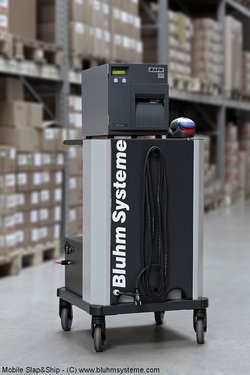
“Mobile Print & Ship” uses an RFID desktop printer placed on a mobile trolley which can be used for a variety of production and logistics scenarios. Using this system, tags can be defined and printed locally at the product itself.
The operator first scans the pallet barcode, which is then transmitted to the printing unit. The printer then uses this barcode data as input for the creation of an EPC (Electronic Product Code). Finally, the labels are applied by hand to the items.

The “Online Print & Ship” solution also involves the use of an RFID desktop printer. However, in contrast to the “Mobile Print & Ship” variant, the “Online Print & Ship” solution is a fixed installation, equipped with an online connection. The solution is necessary in situations where the packaging does not contain all of the information required for the automatic generation of an EPC – such as the EAN-18 number, for example. In such cases, the package or order number must be checked against a database (for example) in order to determine the EPC that should be generated.
Another scenario in which an online connection is advisable is when the ordinary EPC generation and labelling process needs to be documented in the company’s own database.
Both the “Mobile Print & Ship” and “Online Print & Ship” systems can process label formats from 19 x 6 mm to 228 x 2,540 mm and come with a “Flag Tag” option, which increases the read performance of RFID tags on metal surfaces or with liquids.
RFID desktop printer Zebra R110Xi4
This high-performance industrial printer enables by combination with the innovative adaptive RFID-Coding Technology a maximum flexibility with printing, respective coding of RFID SmartLabels and up to all „Inlays“. Hereby the Zebra R110Xi4 is particularly suitable for customers that have to process a high number of different SmartLabel- or even Inlay-variants with a high output.
Benefits from the Zebra R110Xi4:
- RFID-Desktop Printer optimized for high quantities of labels to be printed
- flexible by adaptive RFID-coding technology (a combination of several reader-elements), enables to write on different types of transponder, if necessary also in various positions
- cost-efficient for consumables as RFIDTransponder (so-called „Inlays“) can be coded also, thus SmartLabels are not required
Adobe Reader is required to open and view PDF files. This can be downloaded free from adobe.com.
Available Documents
- Choose from 203 and 300 dpi print engines
- Capable of handling print speeds up to 16 ips
- Numerous I/O’s ease interfacing with external device
- Monitor operation via a web browser
Markoprint Integra One ip LX
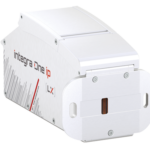
Unleash the Power of Proven Washdown Technology (IP Protection) for Seamless Performance in Complex and Demanding Applications. Experience High-Speed Printing and Effortless Operation with Up to 10 mm Print Distance. Discover Impressive Innovations, including a Patented Mechanism for Secure Ink/Printhead Unit Hold, Setting a New Standard in Printing Excellence.
View ProductModel 5300 RFID Smart Label Printer-Applicator
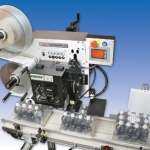
Weber’s exclusive Model 5300 RFID label printer-applicator makes it easy to print, encode, verify and apply pressure-sensitive RFID smart labels to cartons and pallet loads in one automatic operation. In addition, the system determines if a tag is unverifiable and rejects it prior to application.
View Product
EasyGo! PriceMark-Down
Summary
Print more labels, with or without changing the price, with this easy and quick app. Choose whether or not to use the item master file to load all products information and read or write (using barcode labels or not) the items to print the labels. Send it to the printer by Bluetooth, WiFi, or serial connection and already you have the labels! Finally, send too the report file to have a movement report.
View ProductMC67 Mobile Computer
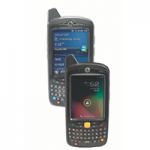
Give your field workforce customers the tools they to work faster and smarter than ever before with the MC67
What can your customers accomplish with the MC67? Everything they need to get the job done. Your customers can choose the operating system that best supports their mobility strategy — Windows® Embedded Handheld 6.5 or Android™ Jelly Bean (4.1) — to instantly access the wealth of information in their business systems to increase task efficiency and accuracy. This fully-featured powerhouse of a device lets workers access information in the backend system; scan practically any bar code in almost any condition; capture documents to simplify recordkeeping; take and send video and photos for real-time repair support; and call a customer with an arrival window — all at 4G HSPA+ speed.
View Product