
Model 5300 Series Tamp-Blow Label Printer-Applicator
This Weber exclusive provides high-resolution printing and high-speed operation combined with the highly-accurate tamp-blow method of label application. This allows you to add a method of labelling your products quickly and efficiently on your production line.
• Choose from a wide range of 203, 300 and 600 dpi print engines
• Capable of handling print speeds up to 16 ips
• Numerous I/O’s ease interfacing with external devices
• Monitor operation via a web browser
• Available with RFID capability
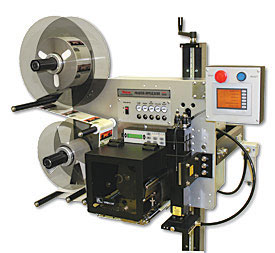
Model 5300 Series Tamp-Blow Label Printer-Applicator
Weber’s Model 5300 tamp-blow system is redefining the meaning of versatility in pressure-sensitive label printing and application.
In addition to offering a broad selection of high-quality print engines that feature various print resolutions and label dispensing rates, this Model 5300 system is available with optional RFID print-encode engines.
Standard direct and thermal-transfer print engines from manufacturers Zebra, SATO and Datamax produce text, bar codes and graphic images at 203, 300 or 600 dpi. The Zebra-based RFID models combine these printing capabilities with the encoding and verification of RFID inlays to meet EPC Gen 2 protocols.

Special Features & Options
The Model 5300 tamp-blow system includes a number of noteworthy features that add to the operational versatility of this printer-applicator:
• Tamp-blow application: This is a very popular method of air-assisted label placement used with standard applications and is particularly useful in the labelling of recessed areas. A printed label is fed onto a tamp pad and held by vacuum, a pneumatic cylinder extends to within .25 inch of the product, and the label is blown onto its surface to a placement accuracy of 0.03″.
• Browser-based monitoring: The status of all operational functions and configurations can be monitored by logging on to a web page that is unique to each Model 5300 unit.
• Numerous I/O’s: The system can be interfaced with many types of external devices.
• One-to-one media consumption: Special label unwind and rewind dimensions are matched to the system’s ribbon supply to ensure they are consumed at the same rate, reducing downtime and eliminating partial changeovers.
• Print job storage: Multiple label printing formats can be stored in the system’s memory, making it easier for an operator to select a job directly from the applicator instead of downloading a computer file.
The Model 5300 tamp-blow system boasts numerous additional features, including an upgradeable microprocessor controller, various inputs/outputs, plus durable construction that will withstand harsh industrial environments.
There also are several optional enhancements that can increase the system’s functionality. A product height sensor, for example, enables the printer-applicator to label items of varying heights delivered by the same conveyor.
Other options include a 15-foot umbilical connection that enables the remote location of the unit’s controller; an adjustable stand for optimum system orientation; label-on-pad and product-presence sensors; plus beacon light alerts to signal the status of label and ribbon supplies.
Adobe Reader is required to open and view PDF files. This can be downloaded free from adobe.com.
Available Documents
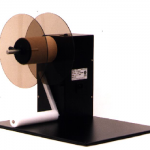
5300- Auto-switching Universal Power
- Supply for immediate adaptability anywhere in the world
- Compatible with all Direct Thermal and Thermal Transfer printers
- Electronic Speed Control will automatically synchronise winding speed to the speed of your printer
- Provides passive winding without skewing print or barcodes on your labels
- Rewind from 2.5cm to 25cm per second
- Easily handles labels from 2.5cm to 10cm wide
- Wind labels face in or face out
- Choose from a wide range of 203, 300 and 600 dpi print engines
- Capable of handling print speeds up to 16 ips
- Numerous I/O’s ease interfacing with external devices
- Monitor operation via a web browser
- Available with RFID capability
SATO CG Series
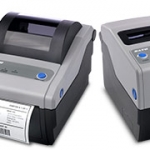
With superior performance and affordable price, these 2″ or 4″, 203 or 305 dpi, Direct Thermal/Thermal Transfer printers are best in their class. The SATO CG Series models are delivered stock out of the box with competitive emulations onboard and optimal interfaces (built in USB standard) for outstanding performance in clinical and processing environments. […]
View ProductElectric Rewinder Model GLR-50
Model 5300 Series Electric Tamp-Blow Label Printer-Applicator
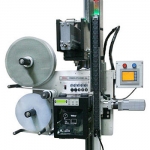
This Weber exclusive label print-apply system provides high-resolution printing and high-speed operation combined with the high-speed electric tamp-blow method of label application.
Geset 100 – Geset Labelling Machine
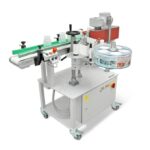
The Geset 100 is a labelling machine for small production series, designed to produce small volumes as accurately and flexibly as would a large plant.
A fast, reliable, and economical solution to product labelling, the Geset 100 labelling machine is part of a modular system.  Up to 50 modules are available for design solutions to customer demands.